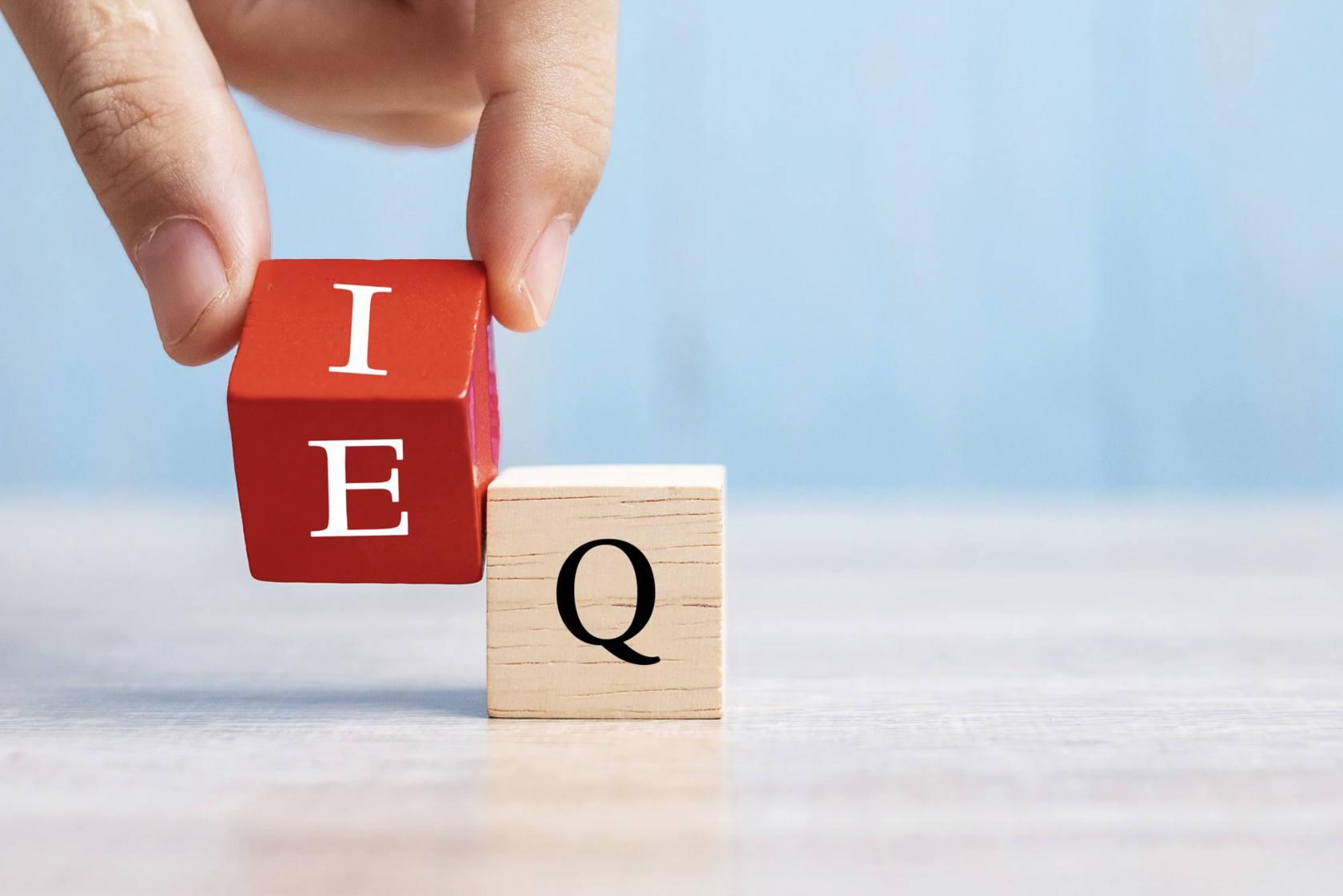
Most leaders I work with are highly capable, thoughtful, and experienced. And yet, even at the most senior levels, I see the same pattern repeat itself. Decisions are made with logic — but they are lived with emotion.
When emotions are unmanaged, misread, or ignored, performance quietly suffers: in engagement, trust, and ultimately execution.
Emotional Intelligence is what allows leaders and teams to bridge that gap.
When emotions are unmanaged, misread, or ignored, performance quietly suffers: in engagement, trust, and ultimately execution.
Emotional Intelligence is what allows leaders and teams to bridge that gap.
The Evidence Behind Emotional Intelligence
According to MHS, Emotional Intelligence is “a set of emotional and social skills that influence the way we perceive and express ourselves, develop and maintain social relationships, cope with challenges, and use emotional information in an effective and meaningful way.”
What’s striking is how consistently research points to Emotional Intelligence (often measured as EQ) as a performance differentiator:
The data is consistent: Emotional Intelligence is not a “soft skill.” It is a measurable driver of performance.
What’s striking is how consistently research points to Emotional Intelligence (often measured as EQ) as a performance differentiator:
- 90% of top performers demonstrate high Emotional Intelligence
- 58% of job performance is explained by EQ
- Individuals with high EQ earn an average of $29,000 more per year (TalentSmart)
- 70% of transformation efforts fail due to people and behaviour factors — not strategy or technology (McKinsey)
The data is consistent: Emotional Intelligence is not a “soft skill.” It is a measurable driver of performance.
What Emotional Intelligence Looks Like in Action
High Emotional Intelligence, shows up through a set of measurable emotional and social competencies:
Together, these competencies shape how we think, decide, and behave — especially in high-pressure, high-stakes situations.
- Self-Perception — understanding one’s emotions, strengths, limits, and emotional patterns
- Self-Expression — expressing thoughts and emotions appropriately, with clarity and assertiveness
- Interpersonal Skills — demonstrating empathy, building trust, and sustaining healthy relationships
- Decision Making — integrating emotional information into sound judgment, impulse control, and problem-solving
- Stress Management & Adaptability — remaining effective under pressure, managing stress, and adapting to change
Together, these competencies shape how we think, decide, and behave — especially in high-pressure, high-stakes situations.
Where Emotional Intelligence Makes the Biggest Difference
For leaders:
In my experience, the leaders who stand out are the most self-aware and emotionally grounded. Leaders with high Emotional Intelligence create psychological safety — where clarity improves, emotions settle, and accountability strengthens.
Gallup research shows that managers account for up to 70% of the variance in team engagement. When Emotional Intelligence is missing, even the strongest strategy struggles to translate into execution. Leaders with high EQ create clarity, not fear.
For teams:
EQ determines how conflict is handled, how feedback is received, and whether differences become strengths or friction. I’ve seen teams unlock performance not by avoiding tension, but by learning how to navigate it emotionally and constructively.
For sales roles:
EQ is often the difference between transactional selling and trusted partnership. It drives deep listening, reading emotional cues, handling objections without defensiveness, and building credibility over time. In complex sales environments, buyers don’t just buy solutions — they buy confidence, understanding, and trust.
For customer-facing roles:
In customer-facing roles, Emotional Intelligence underpins listening, rapport, emotional regulation, and service recovery — the moments that define loyalty. When things go wrong, emotional skill matters more than process.
In my work over the years, I’ve seen customer satisfaction, loyalty, and sales rise not after process changes, but after emotional skills were deliberately strengthened across leadership, sales, and service teams — a finding consistently reinforced by Harvard Business Review, which shows that customers remember how they felt, not just what they were told.
In my experience, the leaders who stand out are the most self-aware and emotionally grounded. Leaders with high Emotional Intelligence create psychological safety — where clarity improves, emotions settle, and accountability strengthens.
Gallup research shows that managers account for up to 70% of the variance in team engagement. When Emotional Intelligence is missing, even the strongest strategy struggles to translate into execution. Leaders with high EQ create clarity, not fear.
For teams:
EQ determines how conflict is handled, how feedback is received, and whether differences become strengths or friction. I’ve seen teams unlock performance not by avoiding tension, but by learning how to navigate it emotionally and constructively.
For sales roles:
EQ is often the difference between transactional selling and trusted partnership. It drives deep listening, reading emotional cues, handling objections without defensiveness, and building credibility over time. In complex sales environments, buyers don’t just buy solutions — they buy confidence, understanding, and trust.
For customer-facing roles:
In customer-facing roles, Emotional Intelligence underpins listening, rapport, emotional regulation, and service recovery — the moments that define loyalty. When things go wrong, emotional skill matters more than process.
In my work over the years, I’ve seen customer satisfaction, loyalty, and sales rise not after process changes, but after emotional skills were deliberately strengthened across leadership, sales, and service teams — a finding consistently reinforced by Harvard Business Review, which shows that customers remember how they felt, not just what they were told.
Why This Matters Now
Today’s workplace is emotionally and cognitively demanding — and becoming more so.
In an AI-enabled workplace, technical capability is no longer the differentiator. Emotional Intelligence is what allows leaders and teams to stay grounded, make sound decisions, collaborate effectively, and deliver human value — precisely where technology cannot.
- Hybrid and remote work have reduced informal cues, weakening connection, trust, and shared understanding
- AI and automation are accelerating the pace of work, increasing decision load and ambiguity, and reshaping roles faster than people can emotionally adapt
- Change cycles are constant, leaving little time to process uncertainty before the next shift arrives
- Burnout, anxiety, and disengagement are rising as emotional regulation becomes a daily leadership requirement
- Customers are less patient and more values-driven, expecting human understanding alongside digital efficiency
In an AI-enabled workplace, technical capability is no longer the differentiator. Emotional Intelligence is what allows leaders and teams to stay grounded, make sound decisions, collaborate effectively, and deliver human value — precisely where technology cannot.
How Emotional Intelligence Can Be Developed
The good news? Emotional Intelligence is measurable and developable.
Unlike personality traits or raw cognitive ability, EQ is a set of skills that can be intentionally strengthened over time with the right tools and practices.
In our work, we use the EQ-i® (Emotional Quotient Inventory) framework — one of the most widely researched and scientifically validated EI assessments globally. EQ-i has been used across leadership, corporate, education, and public-sector environments for decades and is recognised as a gold standard in Emotional Intelligence measurement.
The EQ-i framework is also endorsed and referenced by the Forbes Coaching Council, reinforcing its credibility and relevance for senior leaders and organisations.
Specifically, EQ-i helps individuals and organisations to:
Research consistently shows that organisations that invest in structured EI development see improvements in engagement, leadership effectiveness, decision-making quality, and retention (TalentSmart; Six Seconds; MHS).
From a practical perspective, developing EI requires more than awareness — it requires daily behavioural practice. For leaders and teams, this includes:
In my experience, EI development works best when it is intentional, structured, and sustained — supported by data, coaching, and real-world application, not theory alone.
Because Emotional Intelligence doesn’t change behaviour by itself.
Practice does.
Unlike personality traits or raw cognitive ability, EQ is a set of skills that can be intentionally strengthened over time with the right tools and practices.
In our work, we use the EQ-i® (Emotional Quotient Inventory) framework — one of the most widely researched and scientifically validated EI assessments globally. EQ-i has been used across leadership, corporate, education, and public-sector environments for decades and is recognised as a gold standard in Emotional Intelligence measurement.
The EQ-i framework is also endorsed and referenced by the Forbes Coaching Council, reinforcing its credibility and relevance for senior leaders and organisations.
Specifically, EQ-i helps individuals and organisations to:
- Measure Emotional Intelligence objectively, using validated scales
- Identify strengths and development areas across key EI competencies
- Build targeted, practical development plans linked to real workplace challenges
- Track growth over time, turning EI into a measurable leadership capability
Research consistently shows that organisations that invest in structured EI development see improvements in engagement, leadership effectiveness, decision-making quality, and retention (TalentSmart; Six Seconds; MHS).
From a practical perspective, developing EI requires more than awareness — it requires daily behavioural practice. For leaders and teams, this includes:
- Building self-awareness through structured feedback, reflection, and coaching
- Practicing pause-and-respond under stress, rather than defaulting to reactive patterns
- Strengthening empathy through better listening, especially in moments of disagreement
- Embedding EI into leadership development systems, not treating it as a one-off workshop or “soft skills” add-on
In my experience, EI development works best when it is intentional, structured, and sustained — supported by data, coaching, and real-world application, not theory alone.
Because Emotional Intelligence doesn’t change behaviour by itself.
Practice does.
What Emotional Intelligence Changes at an Organisational Level
At scale, Emotional Intelligence changes culture.
It influences:
Organisations that invest in EI move from command-and-control to clarity-and-connection — without sacrificing performance.
It influences:
- Leadership capability pipelines
- Engagement and retention
- Collaboration across functions
- Customer experience consistency
- Change readiness
Organisations that invest in EI move from command-and-control to clarity-and-connection — without sacrificing performance.
Closing Takeaway
Emotional Intelligence isn’t about being emotional at work.
It’s about being human — effectively.
Because in the end, strategy doesn’t execute itself. People do.
It’s about being human — effectively.
Because in the end, strategy doesn’t execute itself. People do.